
Someone shuffles the cards while someone else holds a question in mind. As each card is turned over, a figure appears, water flows, a tower falls, or stars light the sky. Tarot begins its story through these images.
We may reach for the cards because we want to know the future, yet a reading often brings us back to the present: what we are waiting for, what we fear, and which decision we are struggling to make. When a scene on a card resonates with us, thoughts we could not quite put into words begin to take shape.
Can Tarot Predict the Future?
Tarot has long been used for divination. Still, every reading need not be treated as a prediction of a fixed future. There are many traditions of tarot reading, including approaches that focus on reflecting on our present feelings and circumstances.
Different details in the same card can stand out depending on the question. When beginning something new, The Fool may suggest the excitement of setting out. When someone is rushing into a decision without preparation, the figure’s failure to watch their footing may matter more.
The cards do not objectively measure the mind. An interpretation emerges from the images, the question, and the experience of the person looking at them. A reading therefore invites us to ask “What might happen?” as well as “What am I overlooking right now?”
From a Card Game to a Story of the Mind

Source: Wikimedia Commons · Public domain
15th-Century Italy: Cards Made for Play
The earliest documented history of tarot leads to northern Italy in the 15th century. At the time, tarot cards were used for games rather than fortune-telling. Four suits were joined by a series of illustrated trump cards and the Fool.
Cards made for the Visconti and Sforza families of Milan still retain their gold leaf and delicate colors. Images of emperors, popes, love, and death reflected the society, religion, and ideas about human destiny of their time. They are the roots of the imagery we now read as the Major Arcana.
Changing Images Across Europe
As tarot games spread beyond Italy, card names, images, and sequences varied by region and maker. Some French decks later came to be grouped under the name Tarot de Marseille. In these decks, the numbered Minor Arcana cards often show repeated suit symbols, such as cups or swords, rather than scenes from everyday life.
The Late 18th Century: Reading Symbols for Divination
An important shift took place in late-18th-century France. In 1781, Antoine Court de Gébelin proposed a connection between tarot and ancient Egyptian wisdom. His interpretation gave tarot a mystical origin story, but it did not establish historical evidence that tarot began in Egypt.
Jean-Baptiste Alliette, better known as Etteilla, subsequently developed a systematic method of tarot divination. In the 19th century, occultists connected the cards with astrology, Kabbalah, and other symbolic systems, giving cards once used for play new layers of meaning.
1909: Stories in Every Card
Published in 1909, the Rider–Waite–Smith deck had a profound influence on modern tarot. It brought together Arthur Edward Waite’s ideas and Pamela Colman Smith’s illustrations. Rider was the name of the publisher.
Smith gave the numbered Minor Arcana cards detailed scenes with human figures. Readers could look beyond how many cups a card contained to ask who was looking at them and what was happening. Many decks still build on these images and compositions while offering new interpretations.
Today, tarot finds different uses in divination, self-reflection, art, and creative work. Its meaning has continued to grow and change with the people who read it and the times in which they live.

What Is in a 78-Card Deck?
A standard tarot deck widely used today contains 22 Major Arcana cards and 56 Minor Arcana cards, for a total of 78. Historical and specially designed decks may have different structures.
The Major Arcana — Life’s Turning Points
The 22 cards from The Fool to The World explore broad themes such as beginnings, learning, choices, change, recovery, and completion. Reading them in sequence can suggest a person’s journey through the world. The “Fool’s Journey” is one modern way of understanding this sequence; it does not mean that everyone’s life follows the same order.
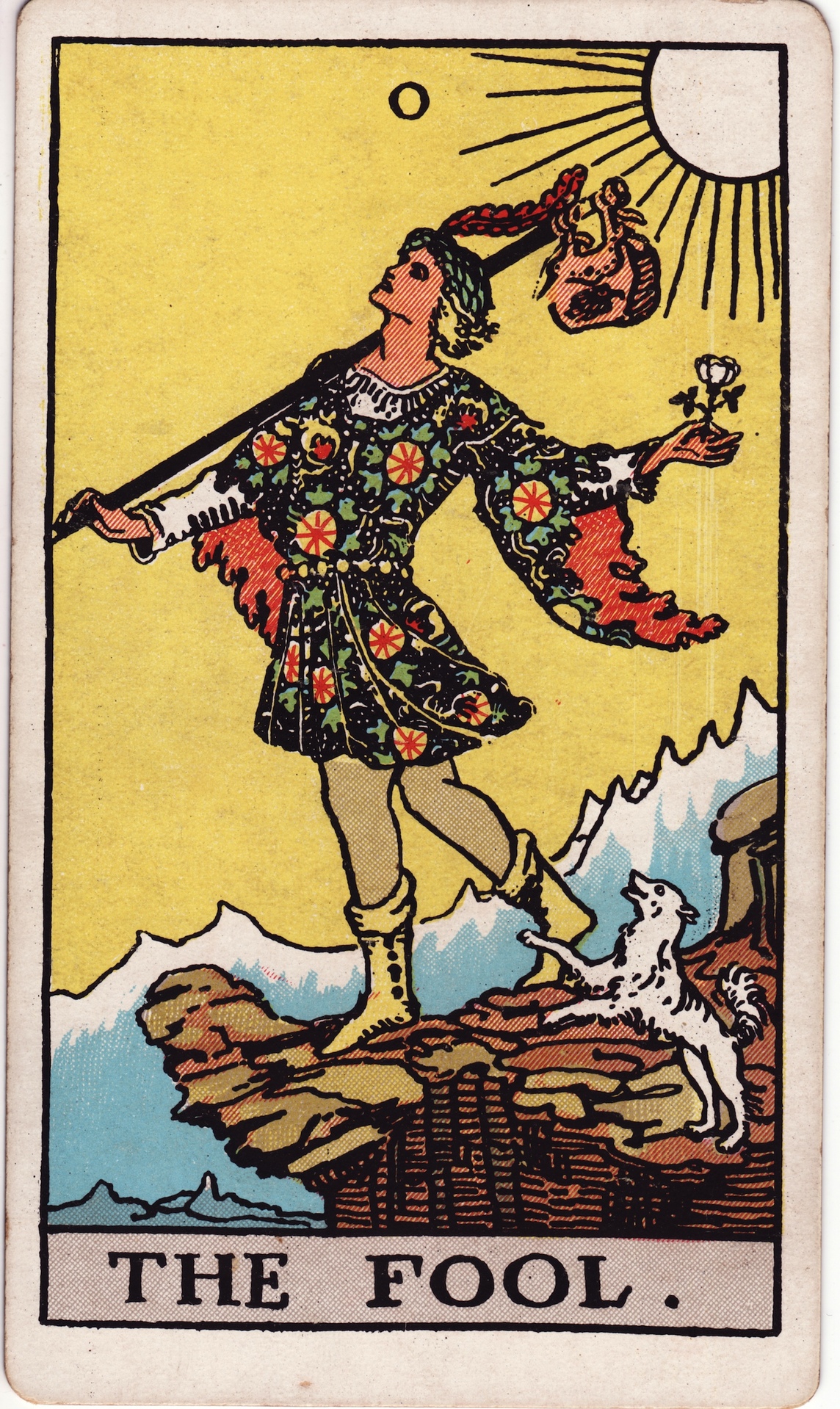


Setting out, the Fool encounters the Magician and the High Priestess, discovering action and the inner world. The Empress, Emperor, and Hierophant introduce care, order, and tradition. The Lovers and Chariot bring choices and momentum; Strength and the Hermit turn toward self-mastery and reflection.
The Wheel of Fortune and Justice introduce change and responsibility, while the Hanged Man and Death suggest pausing and letting go. Temperance seeks balance. The Devil and Tower confront attachments and beliefs that fall apart. The Star, Moon, and Sun explore hope, uncertainty, and clarity. With Judgement and the World, the journey reaches a moment of reflection and completion.
The Minor Arcana — Living Each Day
Everyday life continues between major changes. The Minor Arcana captures moments of expressing love, becoming absorbed in work, delaying a decision, and building the foundations of daily life.
Each of the four suits contains ten numbered cards, from Ace to Ten, and four court cards: Page, Knight, Queen, and King. That makes 14 cards per suit and 56 in all. Court cards can represent a person, but they may also suggest an attitude, a role, or a way of responding to a situation.
Life Through the Four Suits
In the symbolism commonly used in the Rider–Waite–Smith tradition, the four suits bring different concerns into focus. In our lives, feelings, actions, thoughts, and practical realities are always connected.


Cups — Feelings, Love, and Relationships
Associated with water, Cups explores the movement of our emotions. The two figures offering their cups in the Two of Cups can suggest connection and reciprocity, in friendship and cooperation as well as romance. Having feelings and sharing them in compatible ways are different things, so the context of the relationship matters.
Wands — Passion, Will, and Initiative
Associated with fire, Wands asks what we want to do and where we direct our energy. The budding branch in the Ace of Wands may suggest an idea or the urge to begin. Potential, however, is only a starting point. A reading also asks whether we are ready to turn enthusiasm into action.
Swords — Thought, Judgement, and Conflict
Associated with air, Swords concerns thought, language, and decisions. In the Two of Swords, a blindfolded figure holds two blades. The image may suggest an attempt to maintain balance or a reluctance to decide. A Sword card does not automatically mean conflict. Setting a necessary boundary or speaking clearly about a situation also belongs to this suit.
Pentacles — Money, Work, the Body, and Daily Life
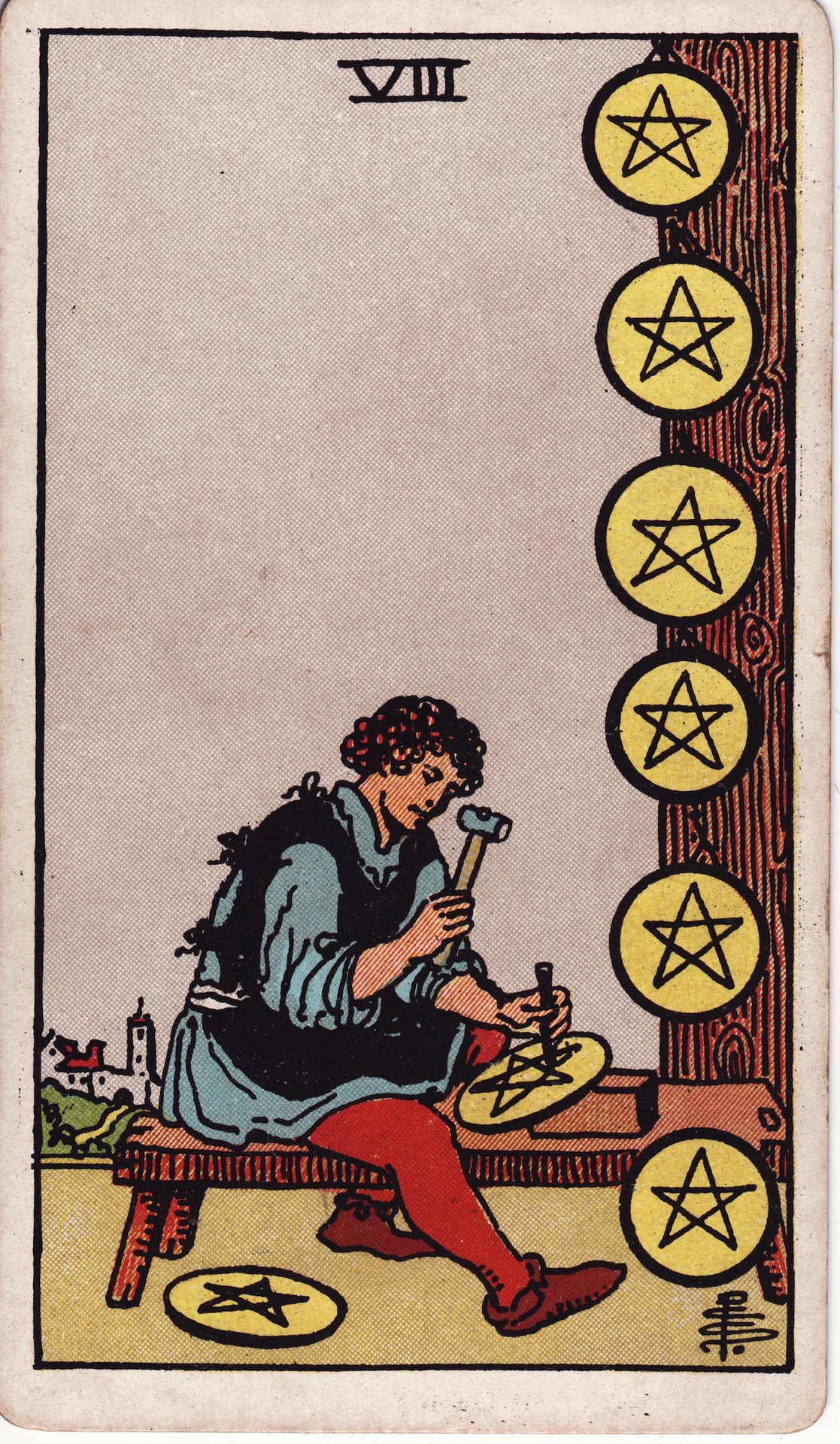
Associated with earth, Pentacles looks at tangible realities. In the Eight of Pentacles, a person repeats a task to develop a skill. The card can speak of learning, consistency, and abilities built over time as well as income. This suit also asks how we care for our bodies, surroundings, and the resources that sustain us.
Reading the Images, Connecting the Story
Knowing a card’s name and basic meaning is a starting point. In a reading, the details of the image and the connections between cards become important: where a figure looks, what they hold, the landscape behind them, and what is moving or standing still.
The Fool looks upward while standing close to a cliff. The scene may suggest freedom and trust, or it may bring to mind a departure made without preparation. Whether the dog is seen as a companion or a warning also depends on the question and the surrounding cards.
Numbers and colors can enrich an interpretation, too. Yet fixed formulas such as “yellow always means happiness” can make us overlook other details. It helps to understand the deck’s intentions and traditions, then read each detail as part of the whole scene.
If one card is a word, several cards can form a sentence. A concern revealed by one card may lead to the action suggested by the next. Outer circumstances and inner feelings may point in different directions.
An Unsettling Card Is Not Necessarily a Bad Card
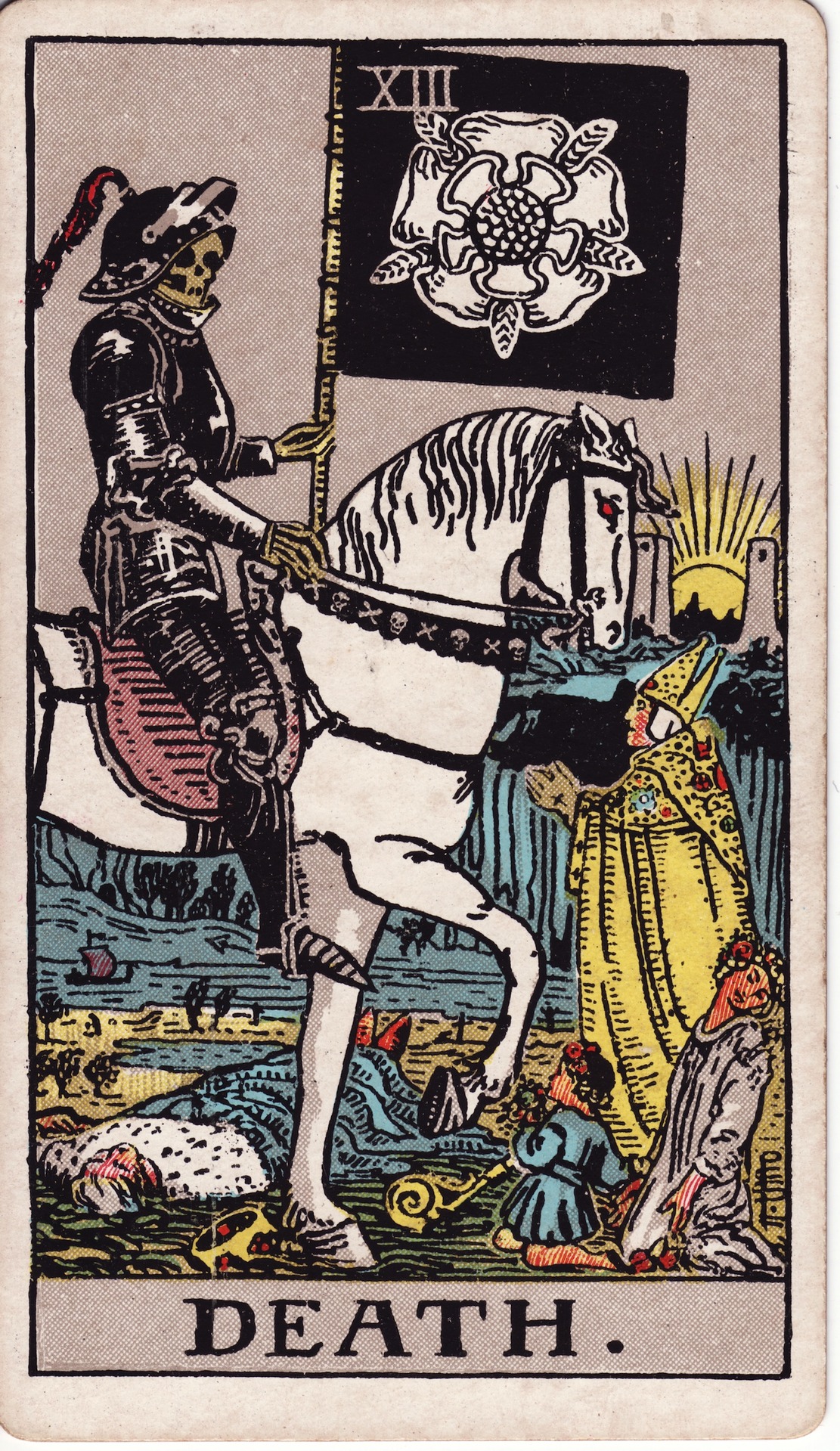


Death is often read as an ending or transition. It may relate to a relationship or role that has ended, or a way of living that can no longer be sustained. A single card should not be taken as a prediction of physical death. Instead, we can ask whether accepting an ending is necessary for the next stage.
The Tower shows a structure believed to be secure being shaken. It may suggest unexpected change or something previously hidden coming to light. Alongside the shock, it can raise the question of what needs to be rebuilt.
The Devil invites reflection on desire, fixation, repetitive habits, and dependence. Are the chains truly impossible to remove, or are we struggling to let go of them? The card should not be used to label a person or relationship as evil.
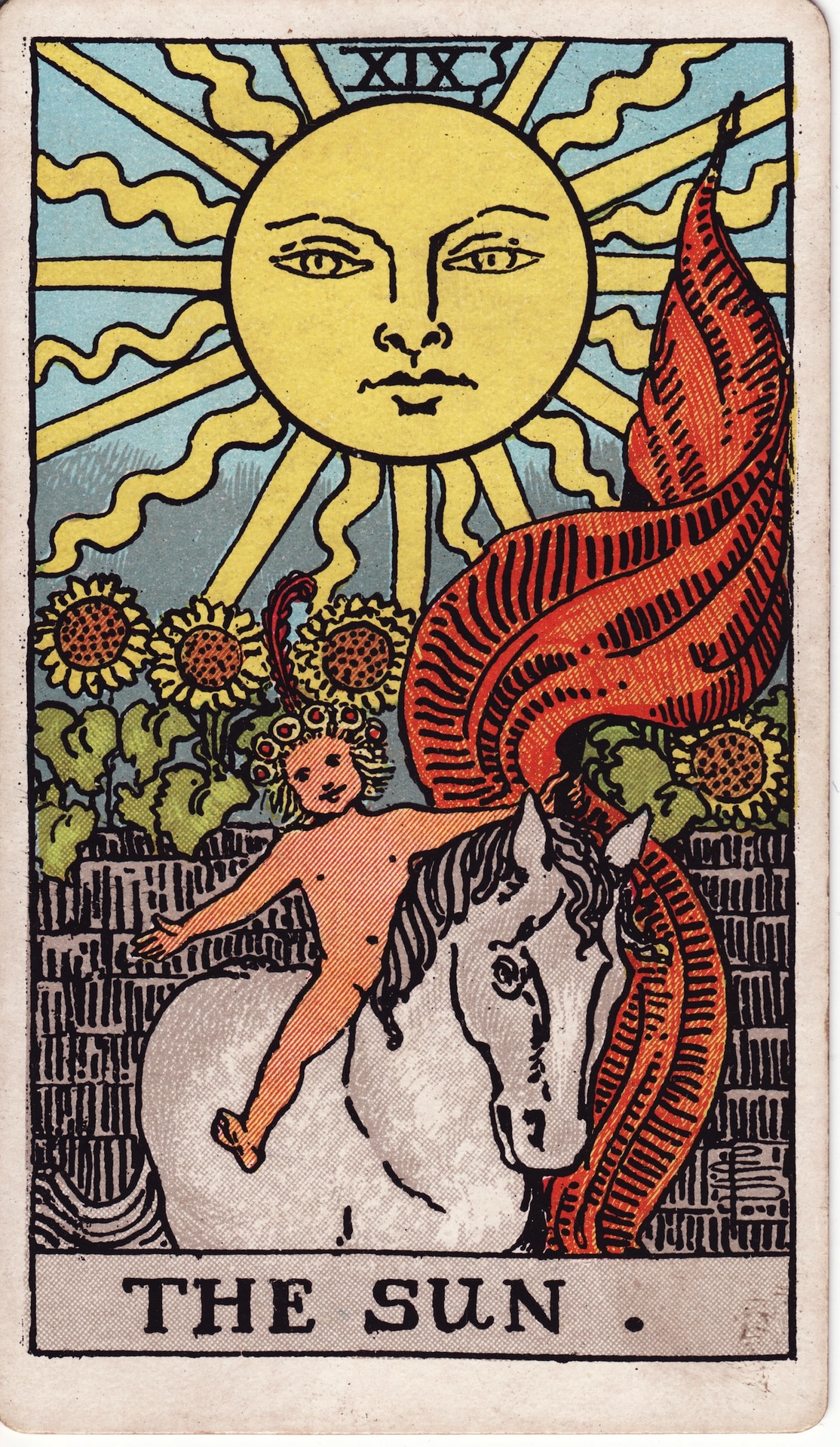
Even bright cards leave room for questions. Is the Sun’s confidence becoming excessive optimism? Is the World’s sense of completion making us reluctant to begin again? Tarot is less a list of good and bad cards than a way of exploring which aspect of a situation matters now.
Why Can the Same Card Mean Different Things?
Meaning develops through the question, a card’s position, and its neighboring cards. In a position called “current strengths,” the Eight of Pentacles might suggest steady effort and skill. In a position called “what needs attention,” it might point to becoming too absorbed in work.
There is no single method for reading reversed cards. Some readers interpret them as blocked energy or an inward focus; others do not use reversals at all. A reversed card does not necessarily mean the opposite of its upright meaning, or something negative.
A reader’s experience and intuition can help reveal connections. But assuming they know everything without listening to the person asking the question narrows the reading. A useful conversation checks what fits the actual situation and revisits what does not.
A Thoughtful Question Deepens a Reading
Even a question focused only on an outcome has an emotional reason behind it. Being specific about what we want to explore, however, makes it easier to connect the reading with actions we can take.
| The first question | A question that looks deeper |
|---|---|
| Will they come back? | What am I overlooking in this relationship? |
| Will I succeed if I begin this? | What should I prepare, and what strengths do I bring? |
| Which choice is right? | What would I gain and need to let go of with each choice? |
The scope of the question matters, too. Rather than asking “What will happen in my life?”, choose one relationship, project, or decision you are considering now. Instead of treating a reading as access to someone else’s private thoughts, focus on what you can observe and what you can do.
Beginning with Three Cards
An arrangement in which each card position has a defined meaning is called a spread. Three cards are enough to begin. Before drawing them, decide on your question and the meaning of each position. Then look closely at the images and connect them with the cards’ basic meanings.
Question: What should I consider before beginning something new?
① My current state of mind — The Fool
② The preparation I need — Eight of Pentacles
③ The attitude to carry forward — The Star
This is an imagined spread for illustration. It suggests excitement about a new beginning, balanced by the need to develop skills and prepare step by step. Rather than rushing toward certainty, it encourages a hope we can sustain over time.
The value lies in identifying what we can prepare and putting it into practice, rather than concluding that success is guaranteed.

What I Take from a Reading Is Up to Me
After a reading, it helps to reflect on what stayed with us. Which words were easy to accept, and which felt uncomfortable? Which parts of the interpretation fit our actual circumstances? Writing them down can make those impressions clearer.
Tarot may suggest possibilities, but we do not have to receive them as a fixed future. The cards cannot make our life decisions for us. We can consider their stories alongside real-world information and our own judgement, retaining responsibility for our choices.
Perhaps tarot’s most compelling moments come not only when we find an answer about the future, but also when an image helps us put an unspoken feeling into words.
Historical sources: The Metropolitan Museum of Art · The Morgan Library & Museum · The Warburg Institute · Smithsonian Magazine
Card illustrations: Pamela Colman Smith, Rider–Waite–Smith Tarot · Wikimedia Commons · Public domain. The interpretations in this article are examples based on this tradition’s symbolism; meanings may differ across traditions and decks.