Seeing Yourself Through Four Letters: MBTI

Introducing ourselves with four letters has become surprisingly familiar. Some people nod and say, “That’s exactly me,” while others wonder, “But I’m different depending on the situation.”
Even if you already know your MBTI type, it is easy to overlook what those four letters actually mean.
What Do the Four Letters Tell Us?
MBTI looks at four pairs of preferences: where we direct our energy, how we take in information, how we make decisions, and how we approach the outside world. Different combinations of these preferences form the sixteen personality types.
We all use both sides of each pair. The idea is simply that one side may feel more natural or comfortable to us. Myers & Briggs Foundation
E · I — Where Does Your Attention and Energy Go?
E tends to direct attention toward the outer world of people and activity, while I tends to turn inward toward thoughts and reflection.
As they leave a lively gathering, one person asks, “Shall we find somewhere with a nice atmosphere and have one more drink?” The other replies, “I’ve had a lovely time. I’m ready to go home and relax.”
One wants to keep the company and conversation going; the other needs some quiet time alone to recharge. Wanting to stay out does not always mean someone is an E, and heading home first does not necessarily make someone an I. Noticing which kind of time feels more comfortable in moments like these can help us understand our own preferences.

S · N — What Kind of Information Do You Notice First?
S tends to notice concrete facts and experience first, while N tends to look for connections, meaning, and possibilities.
If two people decided to open a small café, one might start with the location, rent, and number of seats. The other might imagine the atmosphere they could create and the experience they would offer their guests.
One perspective carefully considers practical conditions; the other imagines possibilities that do not yet exist. Working together, they may sometimes find each other frustrating. Yet turning a new idea into something real takes both perspectives.

T · F — What Guides Your Decisions?
T tends to give more weight to logic and consistency, while F tends to consider values and the impact a decision may have on people.
“I’ve had such a hard day.”
One person asks what went wrong and looks for a solution. Another says, “That must have been upsetting,” and listens. Both want to help, but they offer that help in a different order.
Advice can feel premature when someone needs to feel understood, while reassurance alone can feel insufficient when they need a solution. Asking, “Would you like me to listen, or shall we work out what to do together?” can help bridge that difference.

J · P — Do You Prefer Things Settled or Left Open?
J tends to feel more comfortable organizing life through plans and decisions, while P tends to prefer keeping options open as new information comes in.
Before a trip, one person plans the accommodation, restaurants, and travel times. Another wants the freedom to linger somewhere that catches their interest. They are looking forward to the same trip, but different approaches put them at ease.
They might book only what needs advance reservations and leave the rest of the time open. The planner discovers unexpected pleasures, while the more spontaneous traveler enjoys the breathing room that preparation provides.
Being a J does not mean someone is always organized, and being a P does not mean someone never plans. It is closer to the way we prefer to deal with the outside world. Myers & Briggs Foundation

Same Situation, Different Reactions
The following scenes are simply examples for thinking about our differences. A single behavior is never enough to determine someone’s personality type.
“I had such a hard day today.”
“Let’s figure out what we can do about it.”
“That sounds really hard. Tell me what happened.”
Both responses may come from a desire to help. One begins with a solution; the other begins with the person’s feelings. Even good intentions can miss each other when people need things in a different order.
Sometimes the best place to begin is simply to ask:
“What happened?”
As we listen, it often becomes clearer what the other person needs in that moment.
“How Should We Plan This Trip?”
One person feels more comfortable with an itinerary in place. Another feels that a trip needs some open time to be enjoyable.
If they travel together, they might reserve only the things that truly need advance booking and leave the rest flexible. Once we understand each other’s style, it becomes easier to find a way that works for both.
“What Should We Do on Our Date Today?”

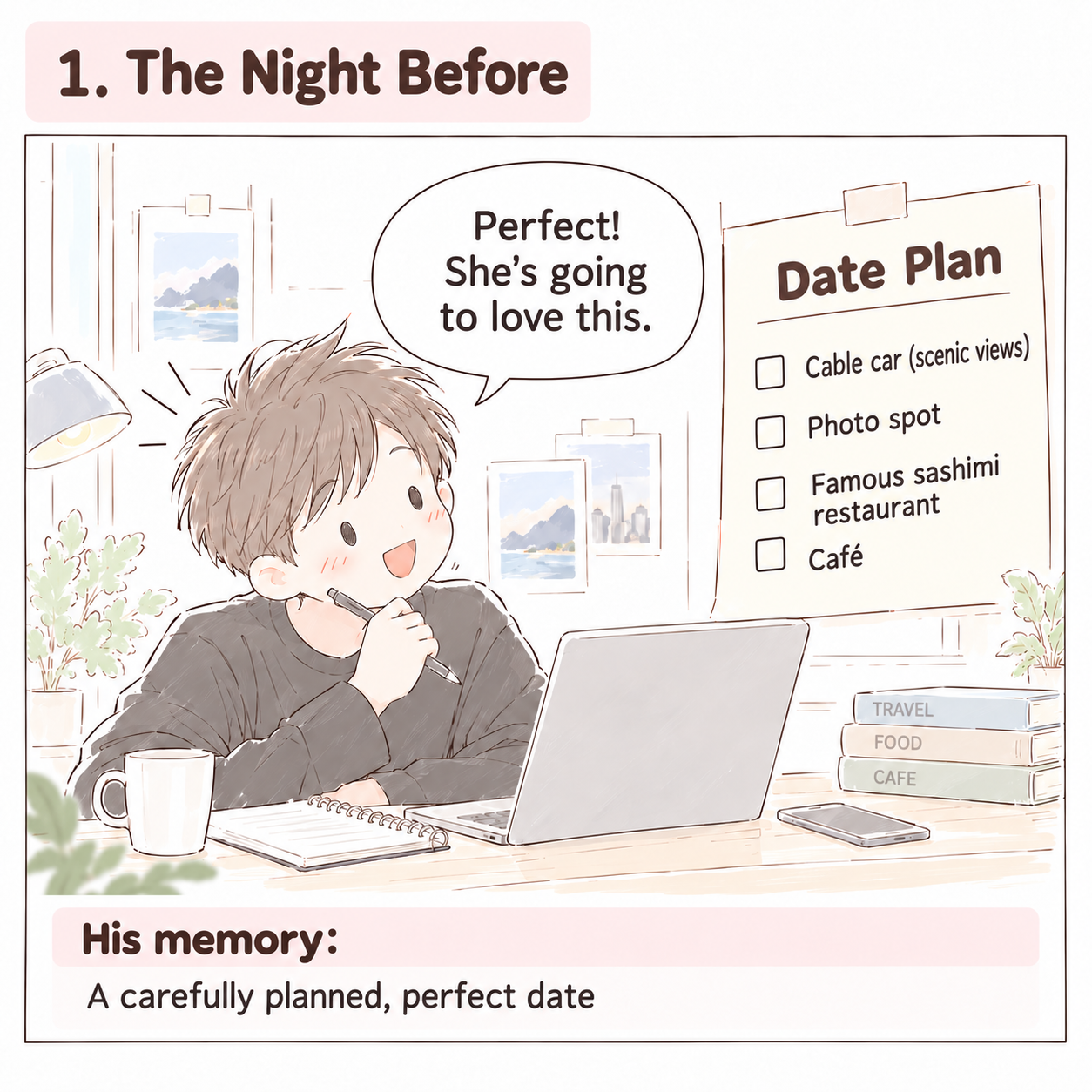
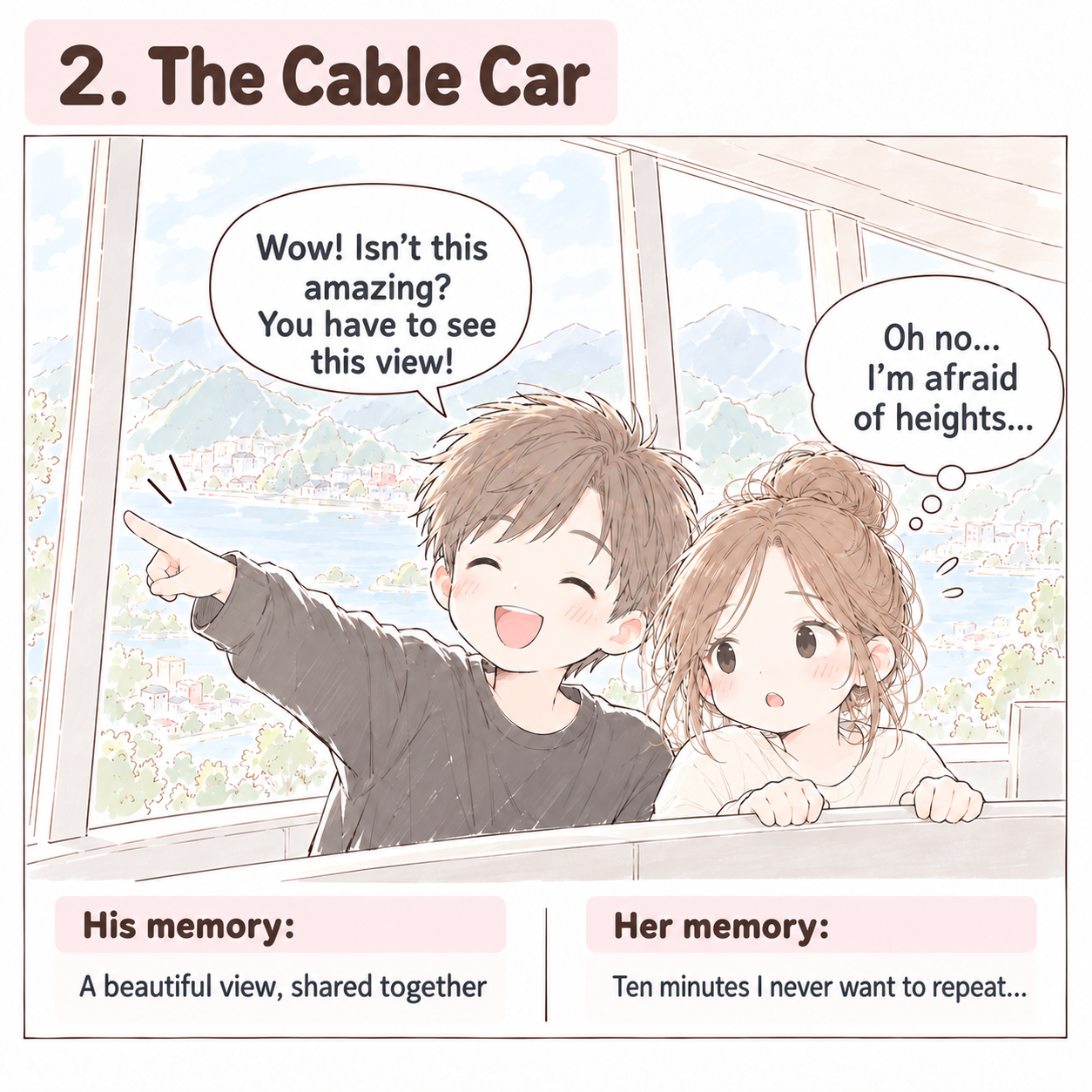
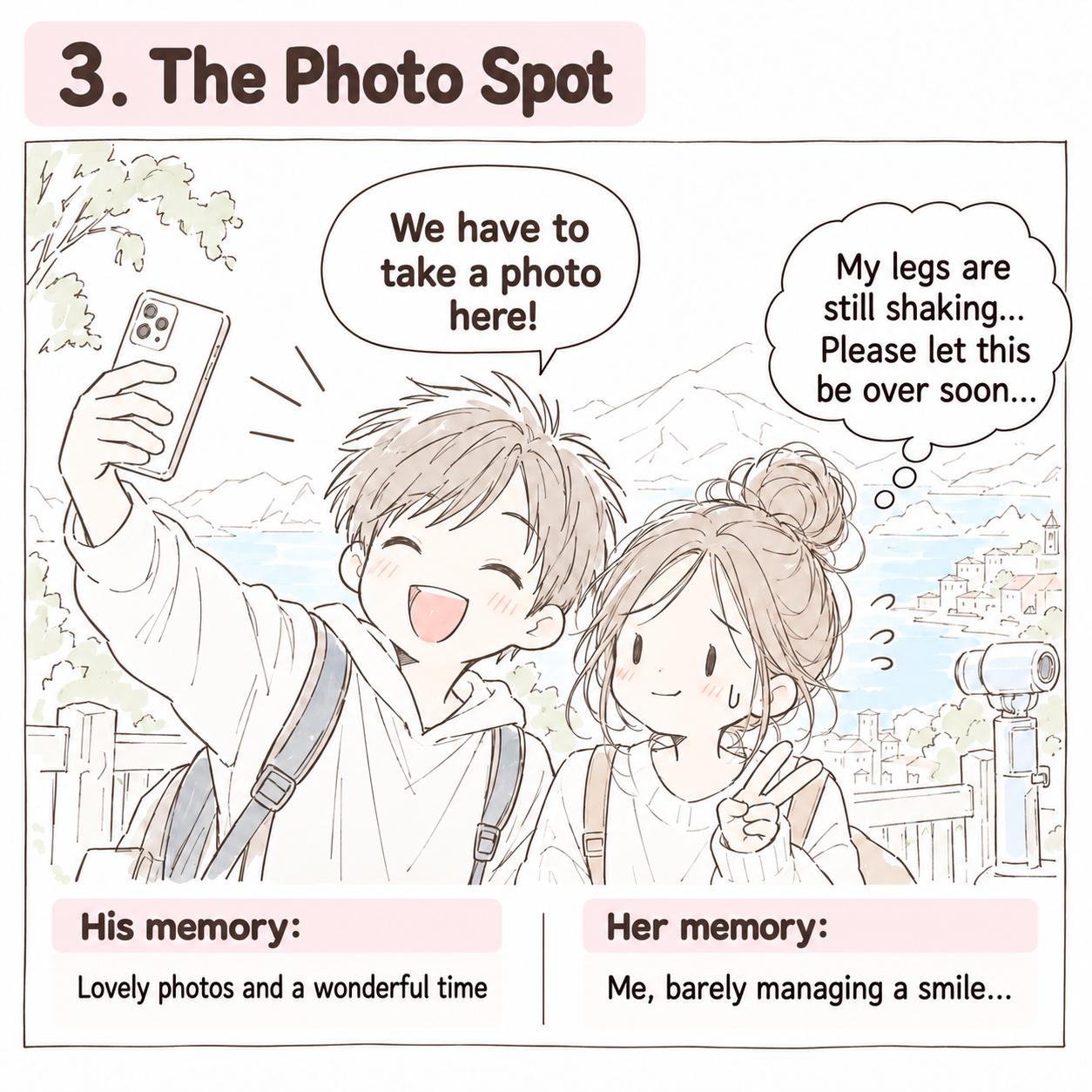

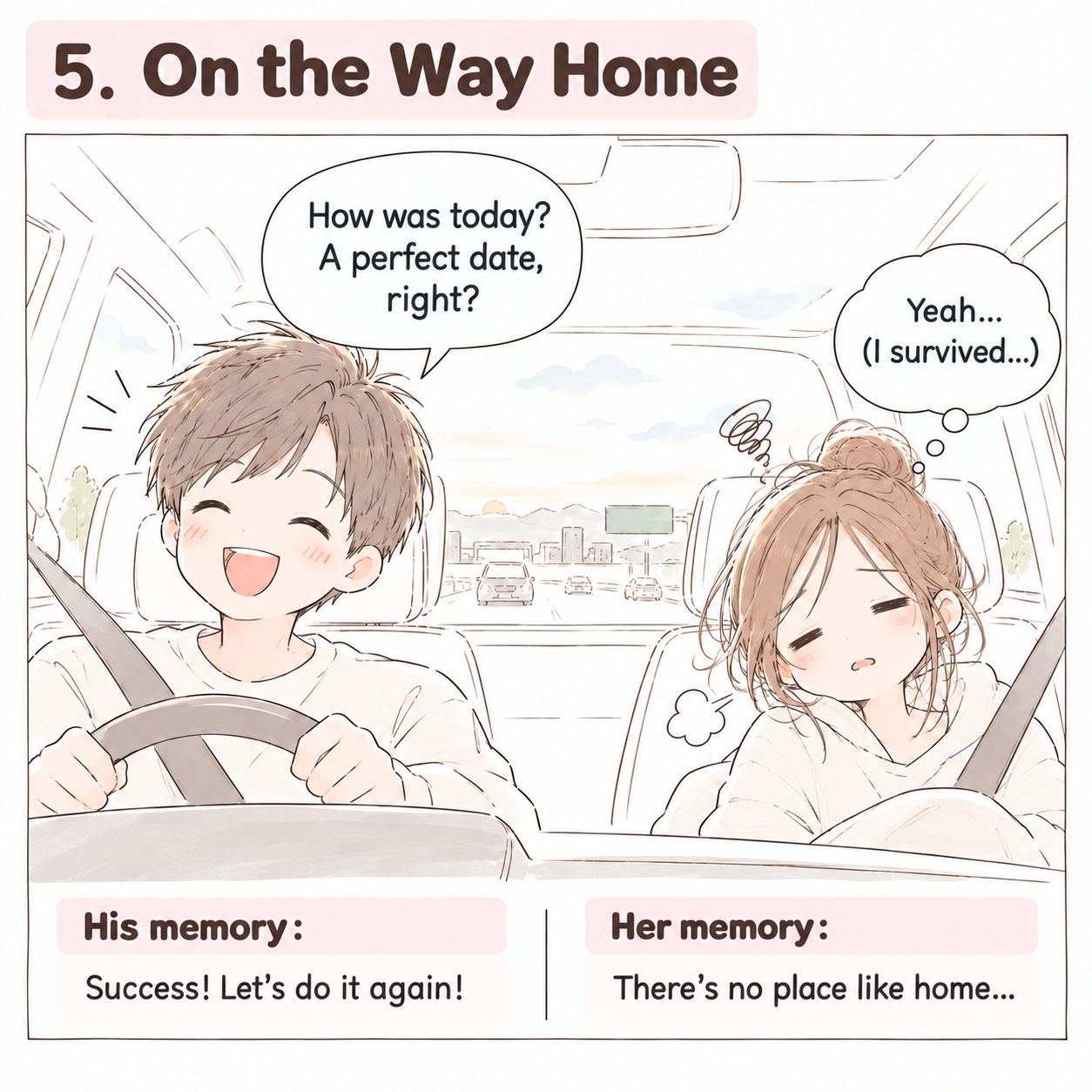

The 16 Types at a Glance
These are brief descriptions meant as a starting point. Even within the same type, people can differ greatly in interests, experiences, and the way they express themselves.
| Type | A tendency you may notice |
|---|---|
| ISTJ | Works responsibly and methodically, drawing on facts and experience. |
| ISFJ | Notices practical needs and consistently supports others. |
| INFJ | Looks deeply at meaning and relationships and acts in line with personal values. |
| INTJ | Sees the big picture and develops strategies toward long-term goals. |
| ISTP | Observes the situation and looks for practical solutions. |
| ISFP | Values personal ideals and sensory experience while staying flexible. |
| INFP | Explores inner values and ideals while imagining possibilities. |
| INTP | Digs into principles and logic in search of new explanations. |
| ESTP | Reads situations quickly and responds through direct action. |
| ESFP | Focuses on people and the present experience, bringing energy to the moment. |
| ENFP | Spots new possibilities and enjoys exchanging ideas with others. |
| ENTP | Questions familiar assumptions and explores a wide range of ideas. |
| ESTJ | Creates standards and procedures to move work forward systematically. |
| ESFJ | Notices the needs of people around them and takes care of shared responsibilities. |
| ENFJ | Encourages people’s growth and helps create a shared sense of direction. |
| ENTJ | Clarifies goals and strategy and drives work forward. |
A Person Is More Than Four Letters
MBTI can be one useful framework for reflecting on ourselves, but it cannot capture a person’s abilities, character, or life experience. The Myers-Briggs Company
If we use “That’s just my type” to define our behavior, or judge a relationship by someone’s four letters alone, we can easily miss the actual person in front of us.
Once we know our type, it may be more useful to take the questions one step further:
“What feels natural to me?”
“What does the other person tend to value first?”
That may be where a more thoughtful conversation—and a better understanding of each other—begins.