From red fruit to roasted beans—and why one cup tastes bright while another feels rich.
We call coffee bitter, bright, or full-bodied. But where do those differences begin? Brown beans do not grow on a tree. Coffee starts as fruit. Its seeds are processed and dried, then roasted, ground, and brewed. Follow that path, and those tasting words become more concrete.
1. Where did coffee begin?
Arabica, the species behind much of the coffee we drink, is native to the Ethiopian highlands. That does not mean today’s coffee-drinking culture appeared there fully formed.
Cultivation and the habit of drinking coffee took root in Yemen before spreading from the Arabian Peninsula. The plant’s home and the place where the beverage tradition grew are two parts of the story.
2. Where does coffee grow?
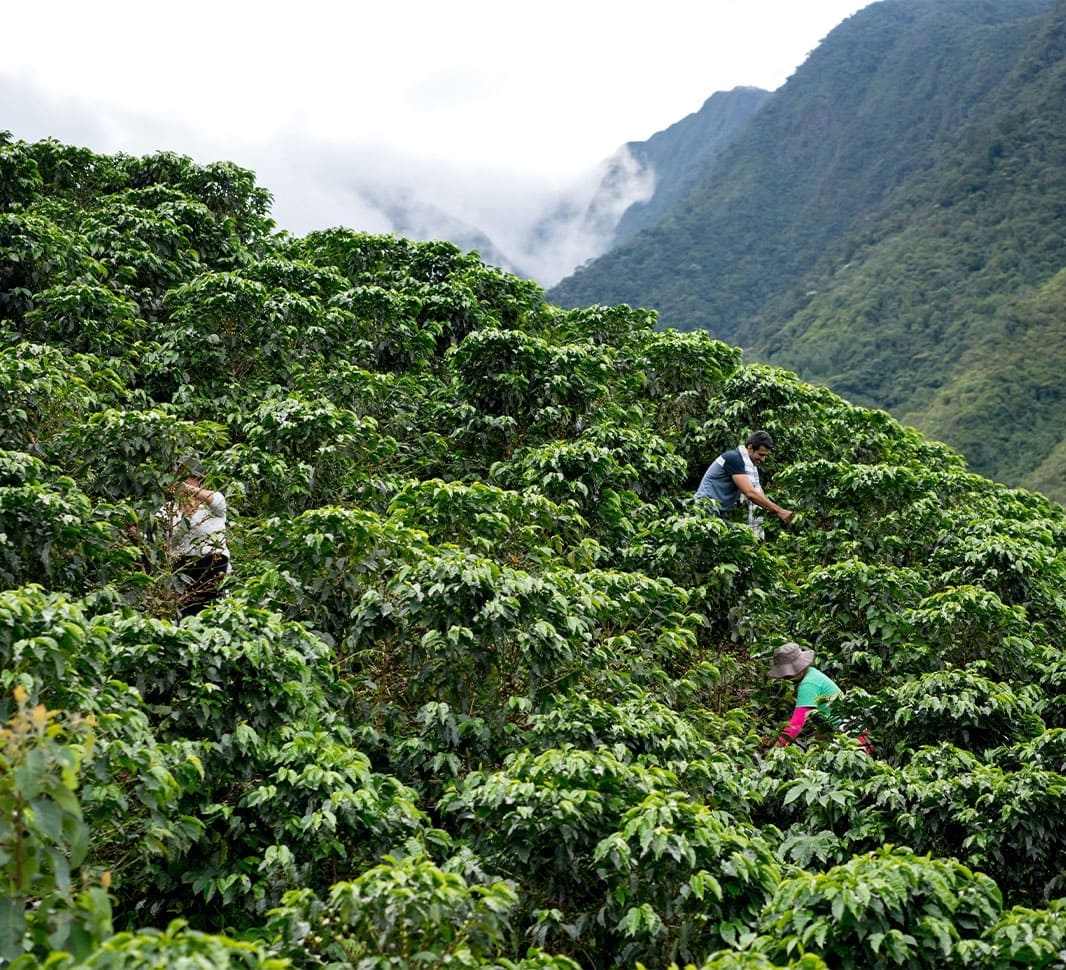
Temperature, rainfall, altitude, shade, and soil all shape a farm. Even within Arabica, different varieties and growing conditions can affect how fruit develops and what the seeds contain. A country name alone cannot promise a particular flavor.
A coffee growing landscape and the harvest within it. Photo: NESCAFÉ Colombia.
Once ripe cherries are picked, the next question is simple: which part of this fruit becomes the bean in our cup?
3. How does a red cherry become a brown bean?
The red fruit on the branch is a coffee cherry, not a roasted bean. Inside are usually two seeds. Processing removes the fruit layers, and drying prepares the seeds as green coffee. Roasting then changes their color and creates familiar aromas. Different processing methods remove fruit layers in different sequences.
The seed inside a ripening coffee cherry is the beginning of the drink.
Variety and growing conditions set the starting material. Processing changes the route from cherry to green coffee: washed coffee has fruit removed before fermentation, washing, and drying; natural coffee is dried as a whole cherry. These choices can influence flavor, but no method guarantees a fixed taste.
Roasting uses heat to create new aromas. A darker roast can emphasize roasted flavors and bitterness, though the green coffee still matters. Finally, grind size and extraction change what reaches the cup. Grinding too fine or brewing too long can draw out more bitterness; insufficient extraction can taste sharp or thin. Origin alone never tells the whole story.
5. What happens when we brew?
Grind roasted coffee and bring it into contact with water: some soluble material moves from the grounds into the cup. That is extraction. Grinding gives water more surface to reach. Grind size, water amount, and contact time can change both the drink’s strength and how it tastes.
Water temperature is another control. Hotter water can extract material faster. For a pour-over, try about 93°C (200°F) as a starting point, then adjust after tasting. A commonly cited home-brewer range is about 92–96°C (198–205°F).
“Hotter always means bitter” and “cooler always means sour” are not reliable rules: temperature also changes how much is extracted, so compare while keeping other variables steady.
One coffee, three brewing methods
Pour-over: water passes through ground coffee and a paper filter, often giving a clearer mouthfeel.
French press: grounds steep in water and a metal screen separates them. More oils and fine particles can remain, giving a fuller texture.
Espresso: pressure pushes water through finely ground coffee to make a small, concentrated drink. A stronger taste does not automatically mean more total caffeine than a larger brewed cup.
If a pour-over tastes thin and sharply sour, try grinding a little finer while keeping the coffee and water amounts the same. If it drains slowly and tastes rough, try a slightly coarser grind.
Using less water to make a stronger drink and extracting more from the grounds are different changes. Adjust one thing at a time so you can tell what helped.
Taste two cups side by side
Make two pour-overs, one at a time. For each, use 15g coffee, 250g water, and water at about 93°C (200°F). Brew the first with your usual grind; grind the second a little finer.
Taste them side by side for brightness, bitterness, and mouthfeel. If the second drains too slowly or tastes rough, try a coarser grind next time. Change only one variable so you can recognize its effect.
How Brewing Tools Change Coffee’s Flavor
Photo: Karl Fredrickson / Unsplash
Pour-over begins with a paper filter and medium-ground coffee in a dripper. Wet the grounds with a little water, then add the rest in stages. As water passes through the coffee bed, it extracts soluble flavors. The paper catches oils and fine particles, giving a clearer mouthfeel that makes differences in aroma easier to notice. Pouring speed and grind size also affect the cup.
Photo: René Porter / Unsplash
French press steeps grounds in hot water before a metal screen separates them. More oils and fine particles remain than with a paper filter, so the texture can feel fuller. Once brewing is finished, decant the coffee into another vessel to reduce continued contact with the grounds.
Photo: Charles Postiaux / Unsplash
An espresso machine pushes hot water under pressure through finely ground coffee, evenly distributed and tamped in a portafilter. It produces a small, concentrated drink in a short time—the base for an Americano and many milk drinks. Grind size, dose, and beverage yield change the balance even with the same beans.
Photo: mostafa mahmoudi / Unsplash
A moka pot heats water in its lower chamber, creating pressure that moves it through the coffee into the upper chamber. Fill water below the safety valve and level the grounds in the basket without tamping.
Follow the manufacturer’s instructions, use gentle heat, and remove the pot when brewing is complete. It makes strong coffee, but its pressure and brewing method differ from an espresso machine.
Photo: Wade Austin Ellis / Unsplash
Cold brew steeps coarse grounds in cool water for a long time, then filters them out. Timing depends on the equipment and recipe; some refrigerated methods use 8–12 hours. Dilute a concentrate with water or milk. The process differs from iced coffee made by cooling a hot brew over ice.
6. How Are Coffee Drinks Made?
Café menus differ in more than the beans they use. Adding water, changing the amount of milk, or making a different foam texture gives the same espresso a different name and taste. These are the basic ingredients; shot counts, cup sizes, and milk amounts vary by café.
Photo: Adi Goldstein / Unsplash
Espresso — Where Many Coffee Drinks Begin
Ingredients: finely ground coffee and water. A machine makes this small, concentrated drink with a short extraction. Without added water or milk, its aroma, acidity, bitterness, and body feel concentrated. The thin golden foam on top is called crema, but plenty of crema does not guarantee a delicious shot.
Photo: Gerson Cifuentes / Unsplash
Americano — Espresso with Added Water
Ingredients: espresso + water. Add hot water for a hot Americano, or cold water and ice for an iced one. The amount of water controls strength. Diluting the same shot does not remove caffeine; the total in a cup depends on the number of shots, the beans, and other factors.
Photo: Pete Willis / Unsplash
Caffè Latte — The Softness of Milk
Ingredients: espresso + steamed milk + a thin layer of foam. Pour warmed milk with fine foam into espresso. A larger proportion of milk softens the coffee’s strong flavors and gives a creamy texture. An iced latte usually uses cold milk and ice. In a plain latte without syrup, the gentle sweetness comes from milk.
Photo: insung yoon / Unsplash
Cappuccino — Coffee and Foam in Balance
Ingredients: espresso + steamed milk + a generous layer of foam. A cappuccino generally has less milk than a latte, with more noticeable foam. Aerate the milk before pouring it over espresso for coffee aroma and a soft, airy texture. Overall balance and foam quality matter more than a rigid rule of three equal parts.
Photo: Lex Sirikiat / Unsplash
Flat White — Fine Foam, a Clearer Coffee Flavor
Ingredients: espresso + steamed milk with microfoam. Often served in a smaller cup with less milk than a latte, a flat white lets the coffee taste come through more clearly. Very fine bubbles blend throughout the milk for a silky pour, instead of a thick foam layer on top.
Recipes and shot counts vary by café, so it is not always interchangeable with a small latte.
Photo: Matt Hoffman / Unsplash
Espresso Macchiato — A Little Milk, a Strong Coffee
Ingredients: espresso + a little milk or milk foam. A small spoonful of foam softens the texture while preserving espresso’s concentrated character. It differs from a milk-heavy latte macchiato. A café’s caramel macchiato may also have a very different recipe from a traditional espresso macchiato.
Photo: Koushik Pal / Unsplash
Caffè Mocha — Coffee Meets Chocolate
Ingredients: espresso + chocolate + milk. Mix chocolate sauce or cocoa with espresso, then add milk. Chocolate sweetness blends with coffee aroma; whipped cream is optional. Despite the similar name, a moka pot is a brewing tool, while a caffè mocha is a chocolate coffee drink.
Photo: An Nguyen / Unsplash
Cold Brew — Cool Water and Time
Ingredients: coffee brewed at a low temperature + water, milk, or ice as desired. Cold brew uses its own brewing method instead of an espresso base. Drink the filtered coffee as it is or dilute it to your preferred strength.
The same beans may produce a different aroma and texture when brewed cold, but that does not mean cold brew always lacks acidity or contains less caffeine.
Choosing a Drink You Enjoy
Try espresso or an Americano to explore the coffee’s own aromas, or a latte if you enjoy the softness of milk. Compare a flat white for a clearer coffee flavor with milk, and a cappuccino for more generous foam.
Trying different drinks at the same café makes it easier to notice how milk quantity and texture change the taste.
Bitterness is a taste. Body is a mouthfeel: does coffee move across your tongue like water, or does it feel rounder and linger? A coffee can be strong in flavor yet light in texture. Acidity can feel bright and lively, like a squeeze of citrus or a ripe berry. Sweetness can suggest fruit or caramel even when no sugar was added.
On your next sip, ask two separate questions: what flavors do I taste, and how does this coffee feel and linger in my mouth?
8. What should I read on a bag of beans?
Look at origin, variety, processing method, roast level, and roast date together. These four combinations are useful starting points for a tasting comparison, not rules for how every coffee from a country must taste.
Compare bright fruit and floral notes with a lighter mouthfeel.
Colombia · Washed · Medium
Compare a balanced cup, gentle brightness, and sweetness; farms and regions vary.
Brazil · Natural · Medium
Look for a softer balance and possible nutty or chocolate impressions.
Indonesia · Wet-hulled · Medium-dark
Compare a rounder texture and lower perceived brightness.
Brew them the same way if you want their differences to stand out. Farm, season, and roaster can change the result even when the labels sound similar.
One cup begins with seeds inside red fruit. Growing, processing, roasting, and brewing each leave their mark. The next time a coffee tastes bitter or feels rich, trace the sensation back through those steps.
♥ A NOTE FROM EDITOR
Finding exactly what I want in a cup of coffee is not easy. After forty years of drinking it, I am still looking. These days, I try to appreciate each coffee’s distinctive aromas and flavors, and savor it slowly. Then comes a small discovery: “Ah, this is the kind of flavor I love.” As I get to know my own taste, I begin exploring distinctive, one-of-a-kind coffees, discovering just how rich the world of coffee can be.