FANOMENON Festival 2027
FANOMENON Festival 2027: Can K-Culture Build a Festival Around Its Fans?
An ambitious new event is taking shape in Korea. The most interesting question is what it will give back to the people who made K-culture travel so far.
Festival

The name combines fan and phenomenon. That makes a promise: the audience is more than a crowd watching the stage.
South Korea’s Presidential Committee on Popular Culture Exchange has announced plans for an 11-day K-culture event, with K-pop performances and awards at Seoul Arena in Chang-dong and exhibitions at KINTEX in nearby Goyang. Park Jin-young, the JYP founder and a committee co-chair, has described a much larger ambition: to make this an annual event with a life beyond Korea.

What is planned: The first FANOMENON is scheduled for December 2–12, 2027. Concerts, fan-centered awards, meetings, screenings, and exhibitions are among the announced elements. An overseas festival beginning in Los Angeles in 2028 is a longer-term plan, not an event that has already taken place.
Four rivals, one project
The most unusual part of the plan may be who is building it. HYBE, SM Entertainment, JYP Entertainment, and YG Entertainment — four of Korea’s largest K-pop companies — are working to establish a joint venture for FANOMENON.
These companies usually compete for artists, audiences, and attention. For this project, they are trying to build a shared stage with public-sector support.
That cooperation could give the event a reach no single company can easily create. It also raises a fair question: can a festival led by the biggest names leave room for smaller labels and different kinds of Korean artists?
The joint venture and program are still being developed, so the answer will depend on what they actually build.


The four companies preparing the joint venture. Logos: HYBESMJYPYG
Why put fans at the center?
K-pop’s global reach was built through songs and performances, but also through the way listeners shared, translated, discussed, and lived with them. A fan can carry a song across a language barrier and make it part of another person’s day.
The proposed awards even recognize fandoms, with artists accepting on their behalf. That is a striking reversal of the usual red-carpet story.
But a festival cannot become fan-centered just by using the word “fan.” Its lineups, access, prices, and room for different communities will show whether people feel welcomed as participants. Those details are still to come. The meaningful test will be the experience itself.
More than a concert
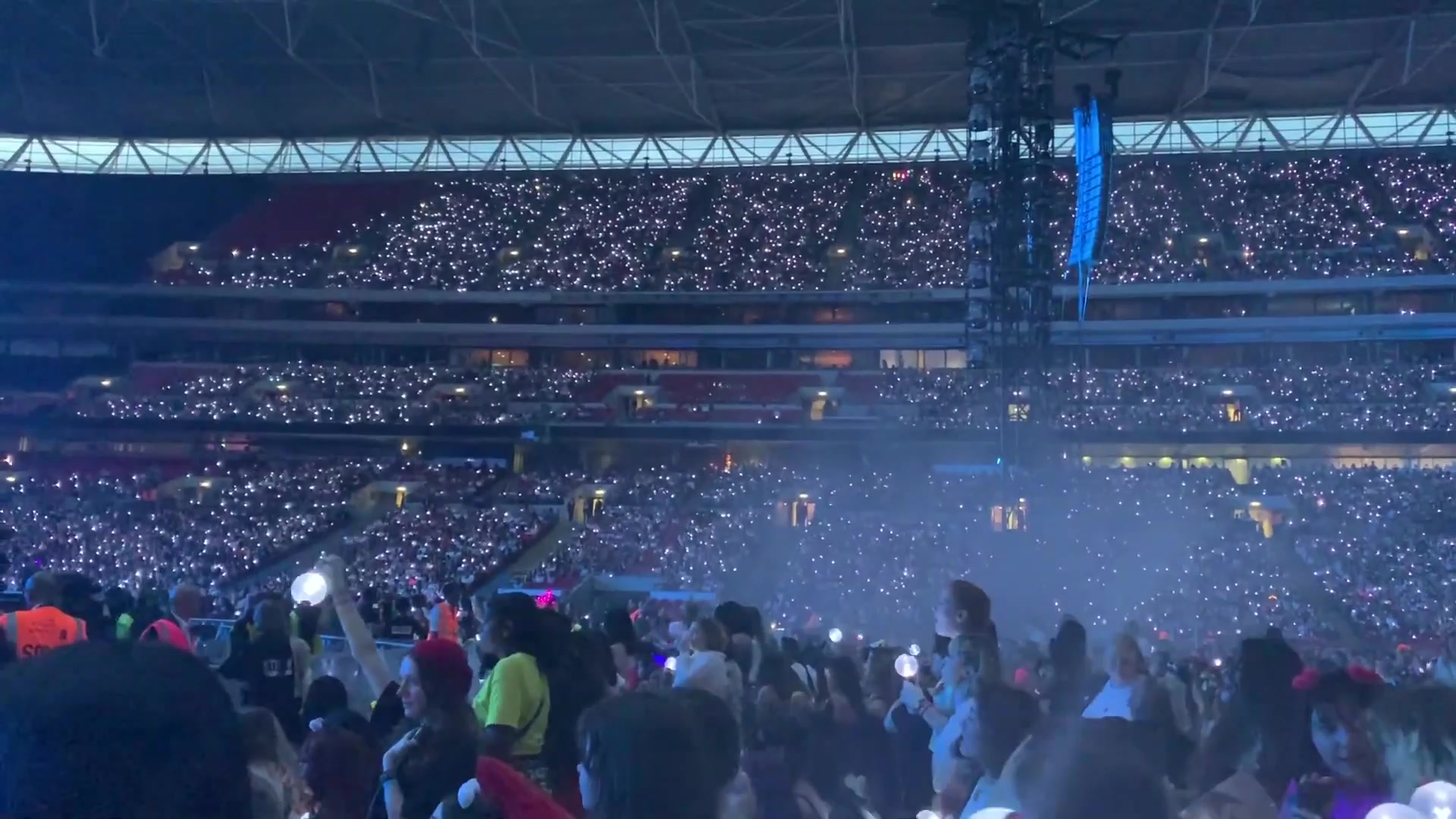
The planned mix of music, food, fashion, games, webtoons, drama, and film reflects how people actually discover Korea. Someone may arrive because of one song and leave curious about a designer, a dish, or a story.
Bringing those worlds together could make FANOMENON feel like a cultural meeting place rather than a series of separate shows.
There is a commercial ambition too. Organizers have projected a large tourism and economic impact, but projections are hopes, not results. For me, the more compelling possibility is human: a place where artists and audiences from different countries can see how much they have shaped one another.
J.Y. Park: From facing an audience to putting fans in focus
For many listeners, Park Jin-young’s name brings a stage to mind before a company. He debuted as a singer in 1994 and has worked both as a performer and as a producer shaping other artists’ music. The acts developed by JYP span different generations: god and Rain, Wonder Girls and 2PM, TWICE and Stray Kids. His career brings together the experience of performing and the work that happens behind a performance.
From a producer’s perspective, the audience can seem like the final arrival. Songs, choreography and staging are prepared before the doors open. Yet after a concert ends, fans keep listening and introduce the music to someone else. The next part of a song’s journey begins away from the stage. That offers an interesting way to look at the FANOMENON project in which Park is involved.
In the plans announced in July 2026, Park outlined an awards event in Korea, an overseas festival in Los Angeles and K-culture centers in major cities. The striking idea is continuity: people drawn together by music would encounter Korean culture and businesses, with places they could return to later. This does not establish his private motivation. It is my reading of the direction described in the public plan.
The proposal for artists to accept awards on behalf of their fandoms also turns the relationship around. Imagine someone accustomed to receiving applause standing onstage to thank the people who have sustained the music. The significance may lie less in the trophy than in whom the artist is representing. How that promise will be expressed at the actual event remains to be seen.
Sources: J.Y. Park official biography · JYP company profile · Korea.net event plans. Interpretation of the plans is the editor’s perspective.
HYBE, SM, JYP and YG: Distinct musical identities
Written side by side, the four company names suggest a vast industry. For listeners, they are more likely to recall a favorite song or an artist’s face. No company has just one sound. Still, thinking about some of their music makes the possibility of a shared festival more tangible.
SM brings carefully constructed performances to mind. From BoA and TVXQ to Girls’ Generation, SHINee, EXO and aespa, listeners can explore the worlds created through vocals, choreography and visual concepts. What interests me is how a song becomes a complete scene, with clothing, movement and imagery contributing to its character.
JYP suggests songs that make the body respond. Remember Wonder Girls’ “Tell Me”: the tune may bring its hand movements back to mind. TWICE and Stray Kids sound very different, but both invite us to consider the pull of a performance people want to follow and learn. This is a listener’s impression, not a rule defining all of the company’s music.
YG makes rhythm and individual presence stand out. Think of BIGBANG and BLACKPINK. A rapper’s delivery, a distinctive voice and a performer’s attitude become part of the music. YG’s own description of a BIGBANG release traces the group’s movement from urban R&B and hip-hop toward a broader range of styles, including electronica. There is a history of change within that strong first impression.
HYBE brings several labels under one structure. BIGHIT MUSIC, home to BTS, and PLEDIS, home to SEVENTEEN, are distinct creative organizations. It makes more sense to approach HYBE through different teams’ stories and working methods than to assign it a single sound.
These artists are examples for understanding the companies, not a confirmed FANOMENON lineup. If the festival connects different tastes, someone waiting for a favorite performer might discover an unfamiliar song. Watching a friend’s favorite group could finally reveal what the friend loves about them. Such discoveries are part of what makes a shared project appealing.
Sources: SM · JYP · YG artists · BIGBANG album notes · HYBE labels. Descriptions of musical character are the editor’s impressions.
K-pop stages take shape even without a visiting Korean artist

A touring artist is not the only way K-pop travels. People learn a favorite song’s choreography and build a performance in their own city. They pause and replay a video, practice timing with friends and prepare costumes. During those hours, music moves from a recording made in Korea into other people’s movements and daily lives.
The Korean Cultural Center reported that Mexico’s 2024 K-pop Cover Dance Festival drew an audience of 3,000. Korea.net also lists that year’s cover dance events in Canada and Australia. People who once watched an artist’s performance bring their own practice and interpretation to a stage. This gives the idea of fans carrying culture a concrete form.
Crossing a language barrier also takes time. Listeners look up lyrics, explain an expression in an interview or help a friend understand a funny moment. Translation sometimes extends beyond words to a joke’s context or an expression shared within a fandom. A research project on translating K-pop fandom terminology reflects how distinctive this shared language can be.
That is why putting fans at the center can mean more than filling a venue. It can bring together people who have danced to the music, shared its meanings and introduced it to strangers. Participation programs are still to be confirmed. If the festival recognizes these activities and gives them space, the idea contained in its name could become more visible.
Sources: Mexican Korean Cultural Center event report · Canada cover dance event · Australia cover dance event · Research on K-pop fandom translation.
How affection becomes a culture
It often begins with one song. A melody brings us back; a performance makes us curious. We look up the lyrics, then the people singing them. Gradually, a language and a place that once felt unfamiliar move closer. Everyone enters Korean culture through a different door, but there is often one moment that first catches the heart.
A fan’s life extends beyond the concert hall: waiting for a release, showing a friend a favorite performance, talking about the same scene with someone in another country. What happens when people who have met through screens finally share a physical space? That meeting is what I find most inviting about the name FANOMENON.
Loving the same artist does not make people identical. Their ages, homes, and memories differ. For one listener, a song helped them through a difficult year; for another, it recalls dancing with friends. A festival can give those different reasons a place to meet.
What does it mean to give fans an award?
The announced fandom awards offer an intriguing change of perspective. If artists accept awards on behalf of their fans, people accustomed to watching the stage become the focus of attention. It suggests a moment when artists can return the gratitude they have received.
Yet affection is not easily reduced to numbers. Large purchases and loud cheers express devotion, but so does quietly returning to a song for years and sharing it with someone who needs it. The selection criteria will shape the meaning of these awards. I hope they recognize the time people have spent keeping music alive, as well as the results of competition.
The pleasure of discovering another sound
A festival prepared by four companies could invite listeners beyond their familiar favorites. Someone might arrive for one artist and leave with another team’s song in mind. Sharing a friend’s favorite performance can also reveal something about the friend. These discoveries offer a different pleasure from simply checking a lineup.
The same possibility runs through food, fashion, and stories. A stage outfit might spark curiosity about a designer; a drama might lead someone to try a new dish. If these experiences connect naturally, visitors can follow their own interests through Korean culture. This is the festival I hope to see; its actual program remains to be confirmed.
Performances and memories that endure long after the festival

A spectacular performance is not always the only lasting memory. Laughing with a stranger, receiving help with directions, or sharing a conversation after the final song can stay with us. For someone visiting another country, small gestures of welcome can shape their impression of the whole place.
I hope FANOMENON leaves room for those stories: the joy of seeing a beloved artist, and the pleasure of finding new music and new friends. A festival that gives people a reason to return can carry the idea of a “phenomenon created by fans” beyond the stage and into their lives.
The program is still taking shape. My hope is that this festival will bring people from around the world together — that they will find comfort in one another and leave as friends. May the time they spend singing and laughing together become a warm memory they carry for years to come.
Sources
Event plans and dates: Republic of Korea policy briefingMinistry of Culture, Sports and Tourism. Yonhap on the four-company joint venture. Commentary and questions about the festival are GypsyAnn’s perspective.